The living-room window looks foggy in the morning. Does wiping one stripe with a tissue leave a clear line? That line is your first clue. Moisture on the room-facing surface, outdoors, or inside the sealed glass unit calls for different checks before you ventilate or arrange an inspection.
We checked guidance from the US Environmental Protection Agency (EPA) and window manufacturer Andersen on November 10, 2026. These are observations you can make at home; one mark or photo cannot establish a defect or the repair needed.
Key points
- If it wipes off indoors, dry the surface and note when moisture returns and how the room was ventilated.
- If it looks like outdoor dew, observe from inside to see whether it fades.
- If haze recurs inside sealed glazing, record the location, photos and model for an inspection.

1. If it wipes off indoors, note when it returns
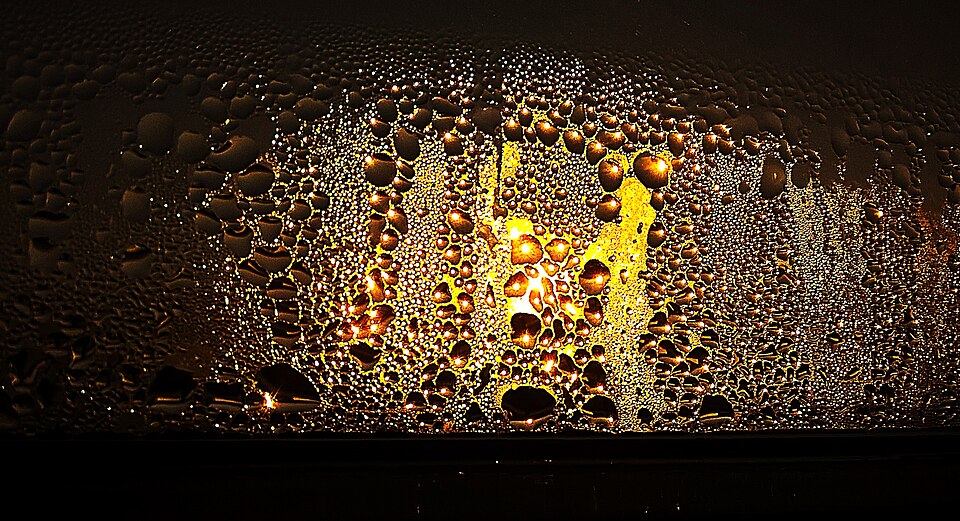
When humid air cools near cold glass, droplets can form on the surface. The EPA lists showering, cooking and indoor clothes drying as moisture sources. If a wipe on the room side picks up water, dry the surface and note when it returns. Start by using fans that exhaust outdoors during cooking or showers and airing the room briefly when conditions allow. EPA home moisture guidance
2. Outdoor dew and haze within the glass differ
Condensation can form like dew on the outdoor face. Observe from inside to see whether it fades later in the morning. There is no need to lean out of a window to examine it. Andersen exterior condensation guidance
The maker describes persistent haze between panes in a sealed glazing unit as a reason to check the seal. This is different from the space between two separately opening sashes. Haze that remains after wiping indoors is not enough by itself to diagnose a seal issue or decide to replace the whole window. If the location is unclear or the haze keeps returning, take photos and request an inspection. Andersen on condensation between panes
3. Record the location and choose what to do next
| Suspected location | Clue | First action |
|---|---|---|
| Room-facing surface | The wiped stripe clears | Dry it and record ventilation after cooking or showers |
| Appears to be outdoors | Shows in the morning and fades later | Observe changes from indoors |
| Possibly within sealed glass | Haze recurs after wiping accessible surfaces | Ask about inspection with photos and the window model |
Hypothetical example: A wet room-facing bathroom window after a shower and one living-room pane that still looks hazy within the glass on a clear afternoon need different checks. Note exhaust use and recurrence for the first; record the location and window model for the second. If the frame or wall gets wet when it rains, report the possibility of a separate leak.